Evaluating Red Rock Formations with Green Bushes Na for Desert Landscape Design
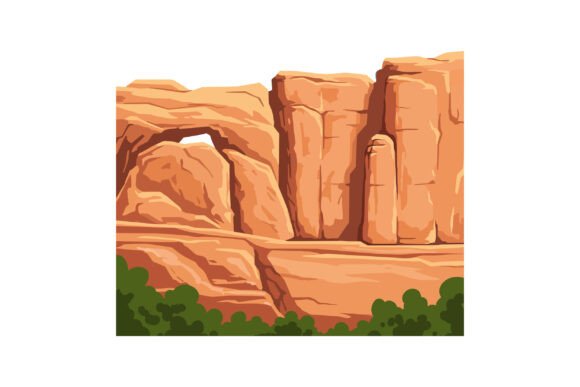
When selecting visual assets or conceptual themes for projects involving arid environments, the specific aesthetic of Red Rock Formations with Green Bushes Na offers a distinct balance between geological drama and organic vitality. This vector illustration style captures the high-contrast interplay of warm sandstone tones against resilient desert flora, set within a calm, natural outdoor environment. For designers, researchers, and content creators aged 20 to 50 who are comparing visual resources, understanding the specific utility of this aesthetic is crucial. It is not merely a picture of a desert; it is a curated representation of tranquility and endurance that serves specific functional roles in branding, editorial design, and environmental storytelling.
The "Na" designation in this context often refers to a specific stylistic classification or asset identifier within vector libraries, distinguishing it from photorealistic renders or abstract geometric interpretations. When evaluating whether Red Rock Formations with Green Bushes Na is the correct choice for your project, you must weigh its stylized clarity against other available formats. This article explores the practical tradeoffs, best-fit scenarios, and comparative advantages of utilizing this specific vector aesthetic versus alternative desert landscape representations.
Distinguishing Characteristics of the Vector Aesthetic
To make an informed decision, one must first understand what separates Red Rock Formations with Green Bushes Na from generic desert imagery. The primary differentiator is the synthesis of warmth and calm through vector simplification. Unlike photography, which captures every chaotic detail of wind erosion and scrub brush, this vector style distills the landscape into essential shapes and harmonious color palettes.
- Color Temperature Control: The warm tones are mathematically balanced to evoke heat without causing visual fatigue. This makes the asset suitable for backgrounds where text legibility is paramount.
- Botanical Accuracy vs. Stylization: The green bushes are represented as cohesive forms rather than individual species. This allows the illustration to represent a generalized "desert oasis" concept rather than a specific geographic location like Sedona or Zion.
- Scalability Without Noise: As a vector format, the red rock formations maintain crisp edges at any resolution, from business cards to billboards, avoiding the pixelation or compression artifacts common in raster-based desert photography.
- Emotional Tone: The composition prioritizes a "calm mood." Jagged, aggressive rock spires are softened, and the spacing between elements suggests openness and breathability rather than claustrophobic canyons.
This level of curation is intentional. For professionals comparing options, the value lies in this predictability. You are selecting a known emotional output rather than hoping a photograph conveys the right feeling after post-processing.
Comparing Vector Illustrations to Photorealistic Alternatives
A common decision point for creatives and marketers is choosing between stylized vectors like Red Rock Formations with Green Bushes Na and high-resolution stock photography. Both have merit, but they serve different strategic purposes. Understanding these differences prevents costly mismatches between asset type and project goal.
Flexibility and Customization
Vector illustrations offer superior adaptability. If your brand guidelines require a specific shade of terracotta or sage green, Red Rock Formations with Green Bushes Na can be adjusted globally in minutes. In contrast, color-grading a photograph to match a brand palette often results in unnatural skin tones in models or muddy shadows in the landscape. If your project requires frequent iteration or localization, the vector option provides a more efficient workflow. Photography is static; the vector is malleable.
Cognitive Load and Messaging
Photorealism demands attention. A detailed photo of red rocks invites the viewer to analyze the geology, identify the plants, and assess the lighting conditions. This high cognitive load is excellent for travel brochures or geological surveys but detrimental for SaaS landing pages, wellness apps, or corporate reports where the background should support, not compete with, the foreground content. The simplified forms of Red Rock Formations with Green Bushes Na reduce visual noise, allowing users to process the primary message faster while still absorbing the thematic context of nature and stability.
Licensing and Longevity
Trends in photography cycle rapidly. The heavily saturated, high-HDR desert photos popular five years ago now look dated. Vector art, particularly styles emphasizing natural tones and clean lines, tends to have a longer shelf life. When comparing long-term asset value, the timeless quality of this vector aesthetic often yields a better return on investment for evergreen content compared to trendy photographic styles.
Strengths and Ideal Use Cases
Selecting Red Rock Formations with Green Bushes Na is most advantageous when the project goals align with its inherent strengths. Based on comparative analysis, this asset excels in the following scenarios:
- Wellness and Mental Health Platforms: The combination of warm earth tones and resilient greenery psychologically signals grounding and recovery. The calm mood is essential for reducing user anxiety.
- Sustainable Brand Identity: Companies focusing on eco-tourism, solar energy, or xeriscaping benefit from the stylized representation of nature. It communicates environmental awareness without the literalism of a documentary photo.
- Editorial Layouts and Infographics: The negative space typically found in these compositions provides ideal placement for headlines, data visualization, or call-to-action buttons. The red rocks act as visual anchors, guiding the eye through the layout.
- Merchandise and Apparel: The graphic nature of the vector translates exceptionally well to screen printing and embroidery, where fine photographic details would be lost or prohibitively expensive to reproduce.
In these contexts, the asset functions as a communication tool, not just decoration. Its distinctiveness lies in its ability to convey "desert" as a feeling of peace rather than a harsh physical reality.
Limitations and When to Choose Alternatives
Despite its versatility, Red Rock Formations with Green Bushes Na is not a universal solution. Professional evaluation requires acknowledging where this asset falls short. Recognizing these limitations saves time and ensures the final output meets audience expectations.
Lack of Geographic Specificity
If your project aims to promote a specific destination, park, or real estate development, this generalized vector style may be insufficient. Users looking for accurate depictions of Delicate Arch or the Wave will find the stylized bushes and generic rock formations misleading. In such cases, site-specific photography or custom topographical maps are necessary alternatives. The vector conveys a vibe; it does not provide evidence.
Perceived Value in Luxury Markets
While vector art has gained prestige, certain luxury sectors still associate photorealism with premium quality. High-end resort marketing or architectural visualization often requires the texture and light fidelity that only photography or 3D rendering can provide. Using Red Rock Formations with Green Bushes Na in a brochure for a $2,000-per-night lodge might inadvertently signal a budget or mid-tier positioning. Always cross-reference the asset style with the price point and brand perception of the target demographic.
Educational and Scientific Accuracy
For botanical guides, geological textbooks, or survival manuals, the abstraction of this vector style is a liability. The "green bushes" are artistic interpretations, not biological specimens. If the user's intent is identification or academic study, this asset fails the utility test. Alternatives include technical illustrations, labeled diagrams, or macro photography.
Decision Framework for Selection
When you are in the evaluation phase, use the following criteria to determine if Red Rock Formations with Green Bushes Na is the optimal resource for your needs. This framework moves beyond subjective preference toward objective fit.
- Primary Function: Is the image decorative/atmospheric (Choose Vector) or informational/documentary (Choose Photo)?
- Technical Constraints: Do you need infinite scaling or color manipulation? If yes, the vector format is objectively superior.
- Audience Expectation: Does your audience value modern minimalism and calm aesthetics, or do they expect rugged realism and detail?
- Budget and Timeline: Custom photography or 3D renders require significant time and capital. Licensed vector assets offer immediate deployment at a fraction of the cost.
- Brand Consistency: Does the warm, calm palette align with existing brand assets? Vectors are easier to integrate into established design systems.
Ultimately, the decision to utilize Red Rock Formations with Green Bushes Na should be driven by the desired emotional response and functional requirements of the project. It represents a sophisticated middle ground between abstract art and literal representation. By offering a serene, scalable, and customizable vision of the desert landscape, it solves specific design problems that neither pure abstraction nor raw photography can address effectively. However, it remains a specialized tool. Successful implementation depends on recognizing that its strength lies in evoking the essence of the red rock desert, providing a calm, inviting backdrop that facilitates communication rather than demanding exclusive attention. Evaluating this distinction ensures that the selected visual resource actively contributes to the project's success rather than serving as mere filler.