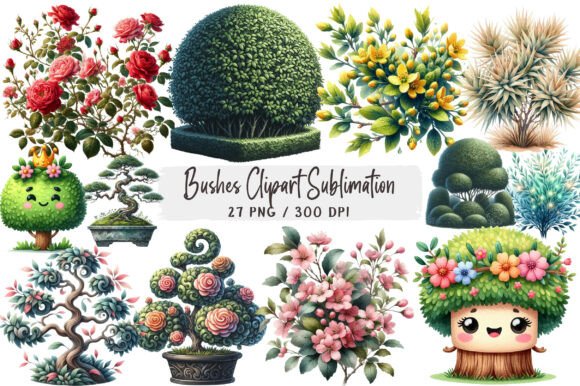
Integrating Watercolor Bushes and Flowers Clipart into Professional Creative Workflows
In the realm of digital design and print-on-demand entrepreneurship, efficiency often hinges on the quality and versatility of your asset library. Watercolor bushes and flowers clipart serves as a foundational element for creators who need to bridge the gap between organic aesthetics and digital precision. Unlike generic stock imagery, specialized botanical assets with specific technical parameters allow for seamless integration across multiple project types, from branding collateral to physical merchandise. Understanding how to leverage these assets within a structured workflow ensures that the final output maintains professional integrity while reducing production time.
Technical Specifications and Workflow Compatibility
The utility of any digital asset is defined by its technical specifications. When acquiring watercolor bushes and flowers clipart, the baseline requirement for professional use is high-resolution fidelity. Assets delivered at 300 DPI (dots per inch) ensure that the intricate details of brush strokes and pigment bleeding remain crisp when printed. A resolution lower than this threshold often results in pixelation or blurring, particularly on textured surfaces like cardstock or fabric.
This specific collection provides files sized at 12×12 inches. This dimension is strategically significant for several reasons. First, it offers ample canvas space for large-format printing without requiring upscaling algorithms that can degrade image quality. Second, the square format aligns perfectly with standard print-on-demand templates for items like throw pillows, tote bags, and album covers. Perhaps most importantly, the transparent background is non-negotiable for efficient compositing. Transparent PNGs eliminate the tedious process of masking or removing white backgrounds, allowing designers to layer foliage directly onto colored backdrops, photographs, or existing illustrations instantly.
Compatibility extends beyond file format. These assets are designed to be easily resized across different software ecosystems. Whether you are working in Adobe Illustrator, Photoshop, Procreate, Affinity Designer, or Canva, the vector-like scalability of high-res raster art ensures consistency. This cross-platform flexibility is vital for freelancers and agencies that must adapt deliverables based on client preferences or specific production requirements.
Strategic Application Across Project Phases
Watercolor botanical elements are not merely decorative afterthoughts; they function as structural components in various stages of the creative process. Integrating them effectively requires understanding their role before, during, and after the primary design phase.
Pre-Production and Mood Boarding
Before committing to a final layout, use these clipart elements to establish visual tone. The solid color distressed effect inherent in this collection communicates a specific vintage or rustic aesthetic. During the planning phase, placing these assets alongside typography choices and color palettes helps validate whether the intended mood aligns with the project goals. This rapid prototyping prevents costly revisions later by ensuring stylistic cohesion early in the decision-making process.
Active Design and Composition
During the execution phase, watercolor bushes and flowers act as transitional tools. In scrapbook design or wall art, they soften hard edges between geometric frames and photographic elements. For packaging design, they provide organic borders that guide the viewer’s eye toward central information like product names or logos. The distressed texture adds depth, preventing flat digital designs from looking sterile. Because these assets are modular, you can combine individual stems to create custom wreaths, corners, or dividers that are unique to each project, avoiding the repetitive look of pre-made templates.
Post-Production and Product Mockups
After the primary design is complete, these assets enhance marketing materials. Use them to decorate mockup scenes, adding context and scale to digital previews. If you are selling physical products like stickers or mugs, incorporating matching botanical elements into your listing photography or social media graphics creates a cohesive brand experience. This consistency signals professionalism to potential customers and reinforces the perceived value of the physical item.
Practical Implementation for Physical Products
The transition from screen to substrate introduces variables that digital-only projects do not face. When using watercolor bushes and flowers clipart for physical goods, specific considerations regarding color management and material interaction become paramount.
- Sticker Production: The transparent background allows for precise die-cut lines. Ensure your cut line has a slight bleed or offset to prevent white halos if the cutting registration shifts slightly. The distressed effect works exceptionally well here, as minor printing imperfections blend naturally with the textured art style.
- Apparel and Textiles: Direct-to-Garment (DTG) printing relies heavily on transparency data. White ink is only printed where opacity exists in the PNG file. The solid color distressed effect reduces ink saturation in certain areas, resulting in a softer hand-feel on t-shirts and preventing the "heavy plastic" sensation associated with solid block prints.
- Ceramics and Mugs: Sublimation printing tends to saturate colors. Watercolor gradients may appear darker on ceramic than on screen. Always run test prints to calibrate your ICC profiles. The 12×12 inch size allows for full-wrap mug designs without tiling artifacts.
- Paper Goods and Stationery: For wedding invitations or greeting cards, the paper texture interacts with the digital watercolor texture. Uncoated papers absorb ink, potentially muting the distressed details. Consider using coated or semi-gloss stocks to preserve the luminosity of the watercolor pigments.
Asset Management and Long-Term Usability
Acquiring 43 distinct watercolor elements is an investment in future productivity, but only if organized correctly. Disorganized asset libraries lead to redundant purchases and wasted search time. Implement a systematic filing structure immediately upon download.
Create a master directory specifically for botanical assets, sub-categorized by type (e.g., bushes, single stems, floral clusters) or color palette. Rename files descriptively rather than relying on generic filenames like "flower_01.png." Tags such as "vintage_rose_pink_distressed" or "green_fern_bush_transparent" make searching within design software or operating systems significantly faster. For teams using cloud storage or digital asset management (DAM) platforms, consistent metadata ensures that every team member accesses the correct version of the asset.
Consider creating derivative versions for specific workflows. While the master 300 DPI files should always be preserved, generating smaller, web-optimized versions (72 DPI) for digital planners, website headers, or social media templates saves processing power and loading time. Keeping a "project-ready" subset of frequently used bushes and flowers in your active workspace further streamlines repetitive tasks.
Navigating Digital Licensing and Color Expectations
Understanding the nature of digital instant downloads prevents operational friction. Since no physical item is shipped, immediate access allows for just-in-time production. However, this also places the responsibility of color accuracy on the user. Watercolor art is particularly sensitive to display calibration. The vibrant greens and soft pinks visible on an OLED monitor may print differently on a CMYK office printer versus a professional giclée press.
To mitigate color variance, integrate a proofing step into your workflow. Print small-scale test swatches on your target material before running full production batches. This is especially critical for the solid color distressed effect, as the interplay between ink density and substrate texture defines the final aesthetic. Recognize that device screens emit light while printed surfaces reflect it; perfect matching is rare, but acceptable tolerance ranges can be established through testing.
Furthermore, respect licensing terms when scaling your business. Verify whether the clipart license permits commercial use on end products versus resale of the digital files themselves. Most standard licenses allow for application on stickers, mugs, and wall decor but prohibit redistributing the raw PNGs. Clarifying these boundaries protects your business from legal exposure and supports the artists who create these essential resources.
Enhancing Creative Output Through Consistency
Ultimately, watercolor bushes and flowers clipart functions as a unifying language across diverse creative outputs. For educators creating engaging worksheets, the organic shapes break up dense text blocks. For marketers designing seasonal campaigns, botanical elements signal timeliness and relevance. For hobbyists building personal archives, these assets provide professional-grade polish without requiring advanced painting skills.
The key to maximizing this resource lies in viewing it as a system rather than a collection of isolated images. By maintaining technical standards, organizing assets logically, and respecting the nuances of physical printing, you transform simple clipart into a reliable engine for creative production. This disciplined approach ensures that every sticker, card, or piece of wall decor produced meets a consistent standard of quality, reinforcing your brand identity and satisfying customer expectations in a competitive marketplace.