Fox Peeking Through Green Bushes and Yel: Integrating Cheerful Nature Illustrations into Professional Design
The Psychology of Whimsical Wildlife in Visual Communication
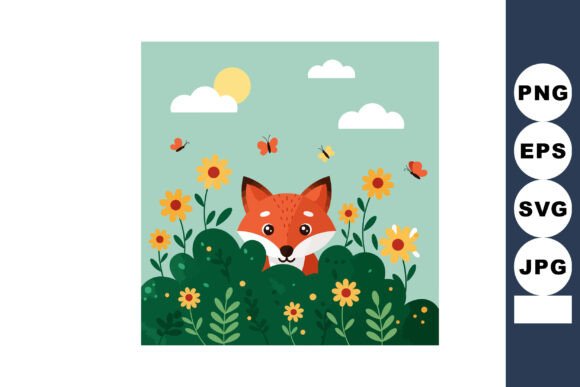
In the vast landscape of digital and print design, imagery serves as the primary anchor for audience engagement. While photography captures reality, illustration captures emotion. The specific motif of a fox peeking through green bushes and yel (yellow) accents represents a powerful intersection of curiosity and warmth. This visual narrative is not merely decorative; it functions as a psychological cue that signals safety, playfulness, and organic authenticity to the viewer. When an illustration depicts a fox surrounded by yellow flowers and butterflies under a sunny sky, it triggers associations with spring, renewal, and unspoiled nature.
For professionals and business owners, understanding the semiotics of this cheerful nature scene is crucial. The fox, often portrayed as cunning in folklore, is recontextualized here as a gentle observer. This subversion of expectation creates a sense of delight and approachability. The inclusion of yellow flora adds a complementary color contrast to the green foliage, creating a vibrant palette that naturally draws the eye without causing visual fatigue. Butterflies introduce a element of kinetic energy and transformation, suggesting growth and positive change. These elements combined make this specific artistic composition highly effective for brands and educators seeking to foster a welcoming and optimistic environment.
Technical Versatility Across Vector and Raster Formats
The practical utility of any digital asset lies in its adaptability. A downloadable ZIP containing SVG, EPS, JPG, and PNG files ensures that the fox peeking through green bushes illustration can be deployed across every conceivable medium without quality loss or workflow friction. Understanding the distinct role of each file format is essential for maximizing the value of this asset.
- SVG (Scalable Vector Graphics): This XML-based vector format is indispensable for web development. It allows the illustration to scale infinitely without pixelation, making it perfect for responsive websites where the same image must look crisp on a mobile phone and a 4K monitor. Furthermore, SVG code can be manipulated via CSS, allowing developers to animate the butterflies or adjust the yellow flower hues dynamically based on user interaction or dark mode settings.
- EPS (Encapsulated PostScript): The industry standard for professional printing and large-format signage. If a business owner wishes to use this cheerful nature scene on a storefront window, vehicle wrap, or trade show banner, the EPS file provides the necessary vector data for commercial printers. It preserves color accuracy and line integrity at massive scales, ensuring the fox and foliage remain sharp regardless of physical dimensions.
- PNG (Portable Network Graphics): Essential for preserving transparency. Unlike JPGs, PNGs support alpha channels, allowing designers to place the fox and bushes over colored backgrounds, textured paper, or other images without a distracting white box. This is particularly useful for overlaying the illustration onto presentation slides, app interfaces, or social media graphics where the background is not white.
- JPG (Joint Photographic Experts Group): Optimized for compatibility and speed. While raster-based, a high-resolution JPG is universally supported by email clients, legacy software, and social platforms. It serves as the reliable workhorse for quick previews, low-bandwidth environments, or situations where vector support is unavailable.
Strategic Applications for Educators and Content Creators
Beyond technical specifications, the application of this illustration varies significantly by sector. For educators and researchers, the fox peeking through green bushes and yel imagery serves as a pedagogical tool. In early childhood education, bright, friendly wildlife illustrations aid in vocabulary acquisition and emotional regulation. The specific combination of animals, insects, and flora provides multiple entry points for discussion regarding ecosystems, seasons, and colors. Unlike stark textbook diagrams, a cheerful nature scene fosters a positive learning association, keeping young students engaged during lessons on biology or environmental science.
Content creators and hobbyists benefit from the narrative flexibility of this asset. In blog posts about mental health, gardening, or sustainable living, the image acts as a visual breath of fresh air. It breaks up dense text and reinforces themes of mindfulness and connection to the natural world. For authors of children’s books or indie game developers, having access to both vector and raster versions allows for rapid prototyping. A developer might use the PNG for initial UI mockups and switch to the SVG for the final build, while an author could use the EPS for cover art and the JPG for promotional social media posts.
Color Theory and Seasonal Relevance in Branding
The specific color grading of this illustration—dominant greens accented by vibrant yellows under a sunny sky—aligns perfectly with seasonal marketing strategies and wellness branding. Yellow is psychologically associated with happiness, optimism, and clarity, while green evokes balance, health, and restoration. Together, they form a harmonious analogous color scheme that feels energetic yet grounded.
Businesses in the wellness, organic food, and eco-tourism sectors can leverage this palette to communicate their values instantly. A yoga studio using this illustration on their website immediately conveys a sense of outdoor tranquility. An organic skincare brand can utilize the botanical details to emphasize natural ingredients. The presence of the fox adds a touch of personality that prevents the branding from feeling sterile or overly clinical. It humanizes the brand through anthropomorphic charm while maintaining a respectful distance from cartoonish exaggeration, striking a balance that appeals to both adult consumers and families.
Workflow Integration and Asset Management Best Practices
Acquiring a multi-format ZIP is only the first step; proper integration into a creative workflow determines long-term efficiency. Professionals should establish a standardized naming convention upon extraction. Renaming generic files to descriptive identifiers such as fox-bushes-yellow-flowers-vector.svg or nature-scene-sunny-transparent.png improves searchability within Digital Asset Management (DAM) systems. Metadata tagging is equally important; embedding keywords like "wildlife," "spring," "cheerful," and "botanical" directly into the file properties ensures the asset remains discoverable years later.
When editing vector files (SVG/EPS), designers should maintain layer organization. Keeping the fox, bushes, flowers, and butterflies on separate layers allows for non-destructive editing. This modularity enables customization; a designer might swap the yellow flowers for purple ones to match a client's brand guidelines or remove the butterflies to reduce visual clutter for a minimalist layout. Preserving the original master file while creating derivative versions for specific projects protects the integrity of the source artwork.
Licensing Considerations and Ethical Usage
While the aesthetic and technical attributes of the fox peeking through green bushes illustration are compelling, users must always verify licensing terms before deployment. Commercial use, editorial use, and personal use often carry different stipulations. For business owners and agencies, ensuring the license covers intended applications—such as merchandise resale, NFT creation, or trademark registration—is a critical risk management step. Ethical usage also involves respecting the artist's moral rights; avoiding modifications that distort the original intent or associate the cheerful nature scene with controversial or harmful content maintains the integrity of the artwork and the creator's reputation.
Furthermore, accessibility should not be overlooked when implementing this illustration. Alt text for web use should be descriptive and meaningful, such as "Illustration of a red fox peeking through green bushes surrounded by yellow flowers and butterflies in sunlight," rather than a generic filename. This ensures that visually impaired users receive the same contextual information and emotional tone as sighted users, aligning inclusive design practices with the welcoming spirit of the artwork itself.
Enhancing User Experience Through Organic Imagery
In an era of synthetic AI-generated content and stock photo saturation, hand-crafted or distinctly stylized illustrations offer a marker of authenticity. The fox peeking through green bushes and yel composition stands out because of its specific, curated details. The interplay of light and shadow, the texture of the fur, and the delicate rendering of petals suggest human intention and artistic care. This perceived effort translates to brand trust. Users subconsciously associate high-quality, thoughtful visuals with high-quality, thoughtful products and services.
For UX designers, such illustrations serve functional purposes beyond decoration. They can act as empty state graphics, guiding users gently when no data is present. They can illustrate success messages, rewarding user actions with a burst of visual positivity. They can soften error pages, reducing frustration through empathetic imagery. By integrating a cheerful nature scene into these micro-interactions, designers transform utilitarian moments into opportunities for emotional connection, reinforcing the overall user experience with consistency and warmth.
Ultimately, the value of this downloadable asset extends far beyond its file formats or color palette. It represents a versatile building block for communication that bridges the gap between professional polish and human warmth. Whether used to teach a child about pollinators, brand a sustainable product, or simply bring a moment of joy to a digital interface, the image of a fox amidst yellow blooms and fluttering butterflies remains a timeless and effective visual solution. Its enduring appeal lies in its ability to remind us, across all contexts and industries, of the simple, restorative power of the natural world.