Slim Laser Cut Sliding Box: Precision Storage for Modern Workspaces
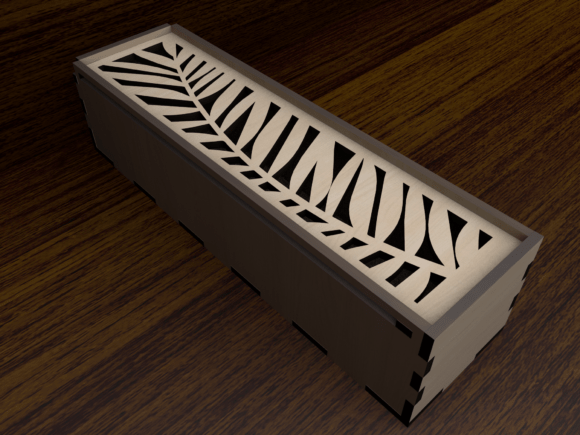
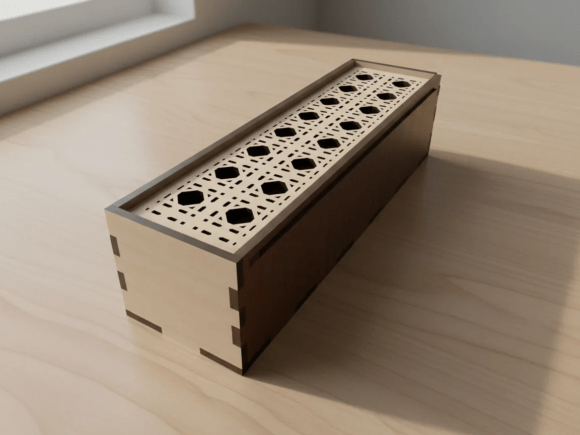
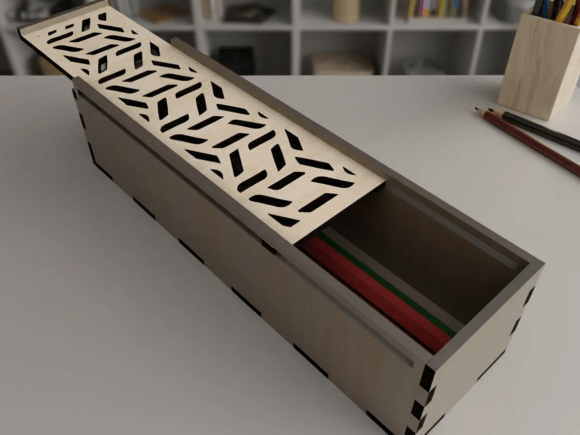
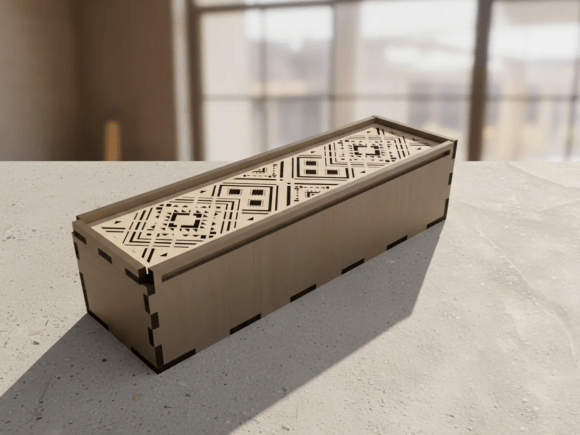
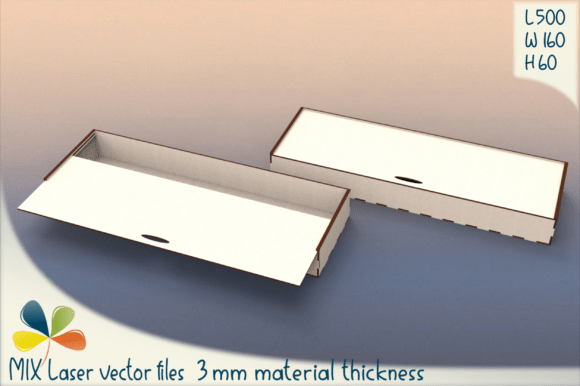
Clutter is the silent enemy of productivity, especially when it involves long, awkward tools that never seem to fit in standard drawers. The Slim Laser Cut Sliding Box addresses this specific organizational gap with a design that prioritizes function over form, without sacrificing aesthetics. Measuring 500×160×60 mm with a precise 3 mm material thickness, this container is engineered for items that are too long for pencil cups but too valuable to leave loose on a desk. It serves as a dedicated home for brushes, pens, knitting needles, and technical instruments, transforming chaotic piles into streamlined, accessible systems.
Why Dimensions Dictate Utility
The specific geometry of this sliding box is not arbitrary; it is a direct response to the limitations of conventional storage. Most desk organizers are designed for vertical or compact horizontal storage, leaving long-handled tools protruding unsafely or requiring deep drawers that waste space. At 500mm in length, this unit accommodates standard paintbrushes, fountain pens, and knitting needles without forcing them to sit at an angle. The 160mm width provides enough lateral stability to prevent tipping, while the slim 60mm height ensures it slides easily under monitors, fits within shallow cabinet shelves, or stacks unobtrusively.
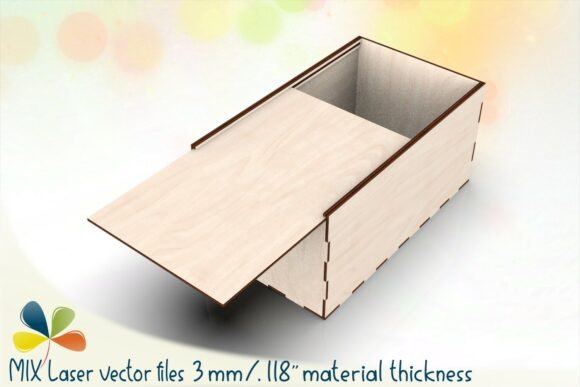
This low profile is particularly relevant for digital creators and marketers who operate in hybrid environments. When your workspace doubles as a filming set for content creation, visual noise must be minimized. A slim, laser-cut enclosure hides the functional mess of creative tools while keeping them within arm's reach. The 3 mm (0.118 inch) thickness offers structural rigidity necessary for sliding mechanisms, ensuring the drawer does not warp or bind even when loaded with heavier metal tools or dense brush sets. This precision manufacturing means the box operates smoothly, reducing the friction that often makes wooden organizers frustrating to use daily.
Real-World Applications Across Disciplines
Understanding where this tool fits requires looking beyond generic "organization" and examining specific workflows. Different professionals face unique storage challenges that this slim format resolves effectively.
For Visual Artists and Illustrators
Artists working with traditional media know that brush care is paramount. Leaving high-quality sable or synthetic brushes upright can cause water to seep into the ferrule, loosening glue and ruining the handle. Storing them flat is safer, but rolling them up makes selection tedious. The Slim Laser Cut Sliding Box allows artists to store brushes horizontally in a single layer. This prevents bristle deformation and keeps handles dry. For illustrators switching between ink pens and markers during tight deadlines, the sliding mechanism allows instant access without lifting lids or digging through jars, maintaining creative flow during intensive sessions.
For Fiber Artists and Knitters
Knitting needles and crochet hooks are notoriously difficult to organize. They roll off tables, get lost in couch cushions, or become tangled in project bags. While needle rolls exist, they lack rigidity and visibility. This box acts as a stationary base station for active projects. A knitter can keep their current size range organized by diameter, sliding the box out to select the right tool and pushing it back to clear lap space. The 500mm length comfortably houses standard straight needles and longer circular cords without bending, protecting the cable integrity which is essential for stitch consistency.
For Educators and Technical Professionals
Teachers, architects, and engineers often rely on specialized long-form tools. Rulers, triangle squares, styluses, and calibration rods require protection from dust and damage. In a classroom setting, a shared sliding box can serve as a centralized distribution point for student supplies, keeping expensive equipment secure yet accessible. For architects drafting manually or using hybrid digital-analog workflows, keeping technical pens and scales in a dedicated slim tray prevents ink transfer to blueprints and ensures calibration tools remain flat and true.
Integrating Digital Fabrication with Physical Organization
For makers and small business owners, this box represents more than just storage; it is a template for customization. Because it is designed for laser cutting, users with access to fabrication tools can modify the internal layout before assembly. An entrepreneur selling handmade jewelry might adjust the dividers to hold specific pliers and mandrels. A blogger reviewing tech products could customize compartments to hold various styluses and screen cleaning tools. The downloadable nature of the design empowers users to adapt the solution to their exact inventory rather than forcing their tools into pre-molded plastic inserts that rarely fit perfectly.
This adaptability extends to material choice. While 3 mm plywood is standard for its balance of weight and strength, users might opt for acrylic for a modern, transparent look that showcases colorful pen collections, or bamboo for a warmer aesthetic that matches existing furniture. Understanding the relationship between material thickness and slot tolerance is crucial here; the design accounts for the kerf (laser cut width) of 3 mm stock, so substituting materials may require adjusting vector files to maintain that satisfying, friction-fit slide action.
Practical Considerations Before You Build or Buy
Before downloading the file or purchasing a finished unit, evaluate your specific environment to ensure this solution delivers real value. Measure your available shelf depth and desk clearance. While 500mm is ideal for most tools, verify that your longest implements fit with a few millimeters of clearance to allow the drawer to close fully. If you primarily use extra-long calligraphy brushes or 14-inch knitting needles, this specific dimension may be insufficient, and scaling the vector file would be necessary.
Consider the weight of your intended contents. The 3 mm construction is robust for wood, but if you plan to store heavy metal machining tools or dense steel rulers, you may need to reinforce the bottom panel or choose a hardwood ply over softer options like MDF. Softwoods can compress over time under heavy loads, potentially causing the sliding mechanism to stick. Conversely, if storing lightweight items like quills or plastic markers, the standard specification is more than adequate and will remain stable for years.
Think about maintenance and finish. Raw laser-cut wood has charred edges that can transfer soot to light-colored tools or fabrics. Sealing the interior with a clear matte varnish or sanding the edges is a practical step for anyone storing textiles or porous brush handles. For those in humid climates, untreated wood may swell seasonally, affecting the slide tolerance. Applying a proper sealant stabilizes the moisture content, ensuring the box functions consistently year-round. This small upfront effort prevents future frustration and protects both the organizer and the valuable tools inside.
Optimizing Workflow Through Intentional Design
Ultimately, the Slim Laser Cut Sliding Box is a tool for cognitive offloading. When every item has a designated, visible place, mental energy previously spent searching or tidying is redirected toward actual work. The clean geometry fits seamlessly into modern minimalist aesthetics, but its true value lies in how it respects the user's time and tools. Whether you are a freelancer managing multiple client projects, a hobbyist preserving expensive supplies, or an educator streamlining classroom logistics, this organizer bridges the gap between creative chaos and professional order.
By aligning physical storage with the actual dimensions and usage patterns of long, slim tools, this design eliminates the compromise inherent in generic organizers. It acknowledges that a paintbrush is not a pencil, and a knitting needle is not a ruler. Downloading, cutting, and assembling this box is an act of reclaiming workspace efficiency. It transforms a passive surface into an active support system, proving that thoughtful organization is not about restriction, but about enabling greater freedom and precision in whatever craft or profession you pursue.