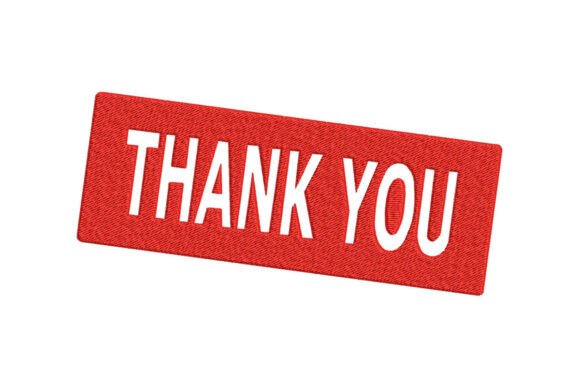
Thank You Embroidery Design: Versatile & Compatible
Expressing gratitude is a universal language, but when that sentiment is stitched into a tangible object, it carries a weight that digital text simply cannot match. The "Thank You" machine embroidery design serves as more than just a decorative element; it is a functional tool for communication, branding, and personal expression. Whether you are stitching a heartfelt message onto a linen napkin for a family gathering or creating branded merchandise for a corporate event, this specific design bridges the gap between technical craftsmanship and emotional resonance. Because gratitude is required in almost every social and professional interaction, having a reliable, high-quality digitized file ready in your library ensures you can respond to moments of appreciation with creativity and speed.
Why Audience Perspective Changes the Value
A single embroidery design does not mean the same thing to everyone. While the visual output remains consistent, the intent behind hooping fabric and threading a needle shifts dramatically depending on who is sitting at the machine. Understanding these distinct motivations helps clarify why format compatibility and versatility are non-negotiable features for this specific design.
For a hobbyist or beginner, the primary concern is often anxiety about complexity. A "Thank You" design is frequently one of the first text-based projects a new embroiderer attempts because the stakes feel manageable yet the reward is high. Beginners prioritize ease of use and clear stitch paths. They need a file that has been tested to prevent thread breaks or registration issues, allowing them to build confidence. For this group, the design is a learning milestone—a way to practice lettering alignment and stabilizer selection without risking an expensive garment.
Conversely, small business owners and entrepreneurs view this design through the lens of efficiency and return on investment. To a custom apparel shop or an Etsy seller, "Thank You" is inventory. It is a best-seller during holiday seasons, wedding peaks, and teacher appreciation weeks. These users care less about the learning curve and more about production speed, density optimization, and commercial licensing. They need a design that stitches out quickly to keep unit costs low while maintaining a premium look that justifies a higher price point. For them, multi-format compatibility isn't a bonus; it is a business requirement that allows them to switch between a single-needle home machine for samples and a multi-needle commercial machine for bulk orders without redigitizing.
Educators and Community Leaders
Teachers, coaches, and nonprofit organizers occupy a unique middle ground. They often operate on tight budgets but require high-volume output. For an educator making end-of-year gifts for thirty students, the "Thank You" design represents scalability. They might be embroidering simple canvas tote bags or hair brushes. Their priority is reliability and material flexibility. They need a design that performs equally well on inexpensive synthetic blends as it does on cotton, ensuring that budget constraints do not result in poor-quality gifts. The ability to resize the design without losing stitch integrity is crucial here, as they may need to adapt the same file for a keychain tag and a larger blanket.
Material Versatility and Practical Application
The true utility of this embroidery design lies in its adaptability across different substrates. Gratitude is expressed in various contexts, and the medium must match the message. The design’s digitization should account for the physical properties of diverse items, ensuring legibility and durability regardless of where it is placed.
- Clothing and T-Shirts: When embroidering on knit fabrics like jersey or interlock, the design must have appropriate underlay to prevent puckering. A "Thank You" on a t-shirt is often casual and wearable, requiring a softer hand and flexible stitch structure that moves with the garment.
- Pocket Mirrors and Keychains: These small, rigid accessories demand precision. The design area is limited, so stitch clarity is paramount. On vinyl or leatherette blanks often used for these items, the needle penetration must be clean to avoid tearing, making optimized stitch counts essential.
- Hair Brushes and Beauty Cases: Personal care items are tactile. Users touch them daily, so the embroidery must be smooth against the skin. Dense satin stitches often work best here to create a raised, luxurious texture that feels intentional rather than scratchy.
- Blankets and Towels: High-pile fabrics present a challenge where stitches can sink and disappear. For these items, the "Thank You" design requires adequate topping and robust coverage to remain visible and readable against fluffy textures.
Technical Compatibility as a Creative Enabler
One of the most significant barriers in machine embroidery is proprietary file lock-in. This "Thank You" design eliminates that friction by providing multiple embroidery file formats. This inclusivity matters profoundly for mixed-device households and collaborative workspaces.
Consider a scenario where a freelance designer creates a mockup on their laptop using professional software but outsources the actual stitching to a local maker space or a friend with a different machine brand. Without universal format support, this collaboration stalls. By including formats compatible with Brother, Janome, Bernina, Singer, and industrial machines, the design facilitates community and cooperation. It acknowledges that creativity is rarely a solitary act confined to a single ecosystem.
Furthermore, format variety future-proofs your purchase. Many embroiderers upgrade their equipment as their skills or businesses grow. A hobbyist today might be running a boutique tomorrow. Owning a design that works on both entry-level hoops and large-scale commercial frames means you never have to repurchase your core assets. This long-term usefulness is a key factor in evaluating digital embroidery files, distinguishing a valuable asset from a disposable novelty.
Evaluating Quality Beyond the Preview
When selecting this design, look beyond the colorful digital rendering. Experienced users know that a pretty picture does not guarantee a smooth run. Evaluate the design based on practical metrics:
- Stitch Count vs. Size: Does the design offer a balanced ratio? Excessively high stitch counts for a small "Thank You" can cause fabric distortion, while too few stitches may look sparse on heavier materials.
- Jump Stitch Management: Efficient digitization minimizes unnecessary trims and jumps. For production users, every trimmed jump is seconds lost and potential finishing time added. Clean digitizing respects your time.
- Resizing Integrity: Test how the design behaves when scaled. Professional-grade files maintain proper satin stitch width and underlay ratios even when resized by 20-30%, whereas lower-quality conversions may gap or overlap.
Matching the Design to Your Current Goals
Ultimately, deciding whether this "Thank You" embroidery design fits your needs requires honest self-assessment regarding your current project phase. If you are a marketer or blogger documenting embroidery processes, this design offers excellent visual appeal and relatable content value, serving as a perfect demonstration piece for tutorials or social media reels. Its universal recognition makes it highly shareable and engaging for audiences.
If you are a consumer looking for a personalized gift, verify that the size options included match your intended blank. There is no sense in purchasing a design optimized for jacket backs if you intend to stitch on baby bibs. However, if the package includes multiple sizes or scalable vectors, it becomes a versatile solution for gifting across age groups and occasions.
For professionals and publishers creating curated collections, this design acts as a staple neutral. Just as a wardrobe needs basic tees, an embroidery portfolio needs fundamental sentiments. It provides a baseline of quality and utility that supports more complex, niche designs. Its presence signals competence and readiness to serve client needs that arise unexpectedly.
Embroidery is an intersection of art, engineering, and emotion. This "Thank You" design succeeds not because it reinvents the wheel, but because it rolls smoothly across the varied terrain of modern making. Whether you are stitching to heal, to sell, to teach, or to celebrate, having a technically sound, universally compatible, and materially versatile file ensures that your expression of gratitude is as enduring as the stitches themselves. By aligning the technical specifications with your specific human goals, you transform a simple digital file into a meaningful instrument of connection.